
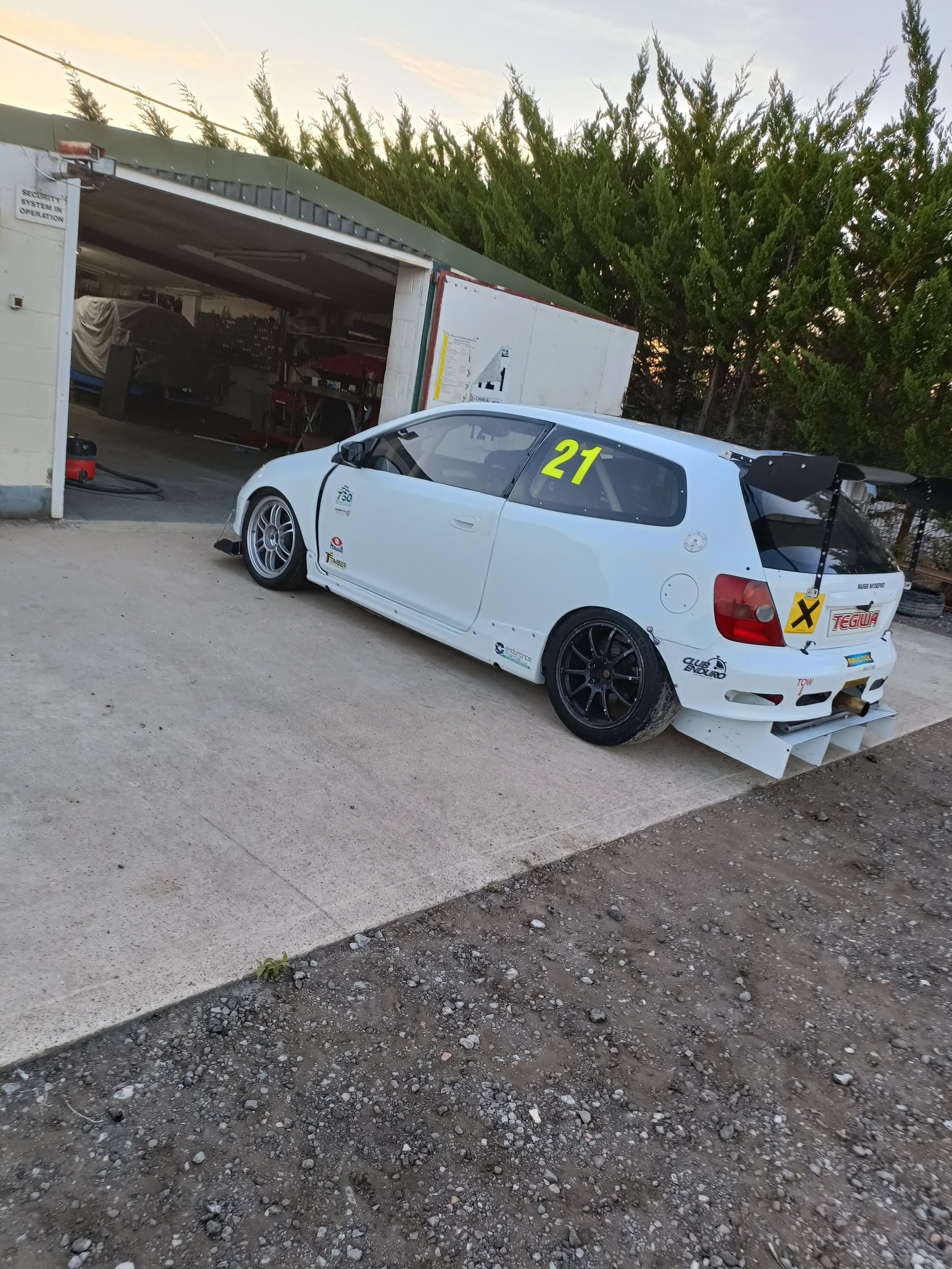
Honda Civic Endurance car
This project centered on the complete ground-up development of a highly modified Honda Civic, purpose-built for endurance racing. Every aspect of the vehicle was re-engineered with performance, reliability, and weight reduction in mind.
A fully integrated flat floor was designed and fabricated, requiring the removal of the original rear wheel wells. In their place, new rear suspension pick-up points were engineered to optimize geometry and stiffness, working in conjunction with a rear-mounted bladed anti-roll bar system for precise handling balance. A long-range fuel tank was seamlessly incorporated within the flat floor, occupying the space traditionally used for the rear seats, improving both weight distribution and endurance capability.
The interior was stripped and rebuilt with a strong emphasis on lightweight construction and functionality. A combination of carbon fibre and fiberglass panels was utilized throughout, reducing mass while maintaining structural integrity and durability under race conditions.
At the front, the chassis underwent extensive modification. Suspension pick-up points were repositioned, bespoke engine mounts were fabricated, and additional clearance was engineered to accommodate larger wheels and tyres. These custom engine mounts were critical in optimally positioning a high-revving, all-steel 2.2-litre stroker engine, paired with a Sadev ST82 6-speed sequential gearbox. This configuration ensured ideal weight distribution and drivetrain efficiency, maximizing on-track performance.
The car was campaigned competitively in endurance events, driven by myself alongside Simon Mauger, a driver well known for his achievements in rallying. Together, the car demonstrated both performance and reliability in demanding race conditions.
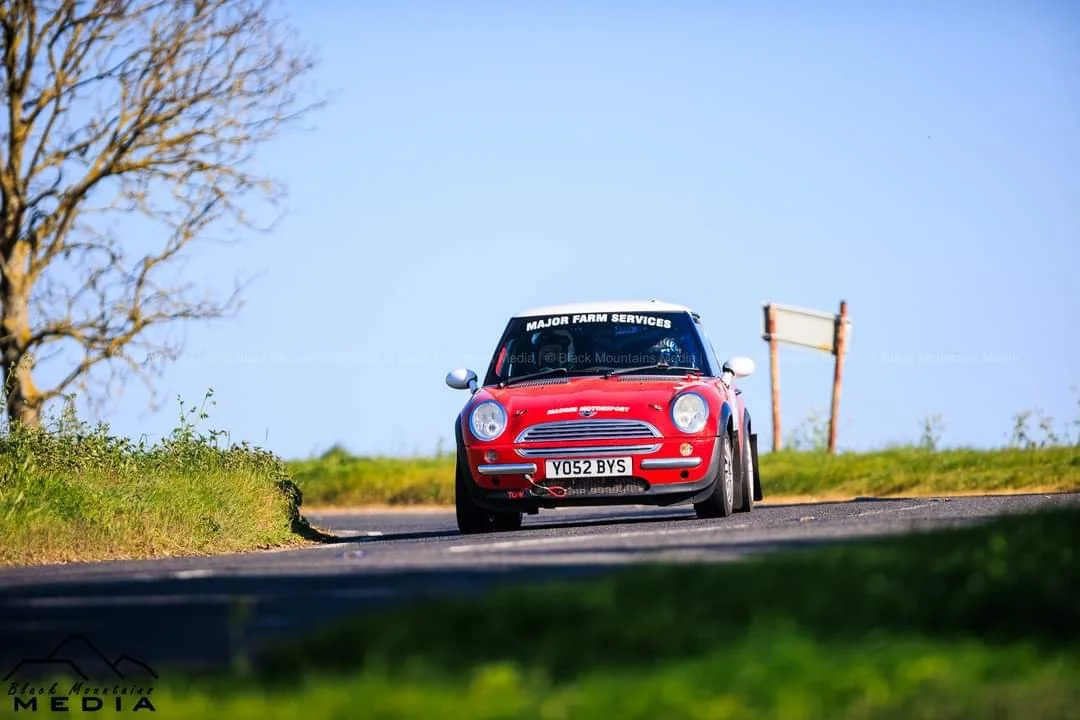
Mini R50 Rally car build
This project involved the preparation and development of a Mini R50 rally car, built to compete in the increasingly popular Mini Rally Challenge. The series is governed by a clearly defined set of technical regulations, and this car was constructed fully in compliance with those requirements.
The build itself was straightforward and efficient, thanks to the well-structured rule set and the inherent simplicity of the platform. The process focused on careful preparation, reliability, and the systematic renewal of components where required, ensuring the car was both competitive and robust for rally use.
One of the key strengths of the R50 platform is its accessibility. These cars provide an excellent entry point into rallying, offering a cost-effective solution for competitors without compromising on performance. They are relatively simple to run and maintain, yet still capable of delivering strong results in the right hands.
This particular car proved its competitiveness at the Corbeau Tendring & Clacton Rally 2022, where it achieved a mid-50s overall finishing position along with a class win—demonstrating both the capability of the car and the effectiveness of its preparation.
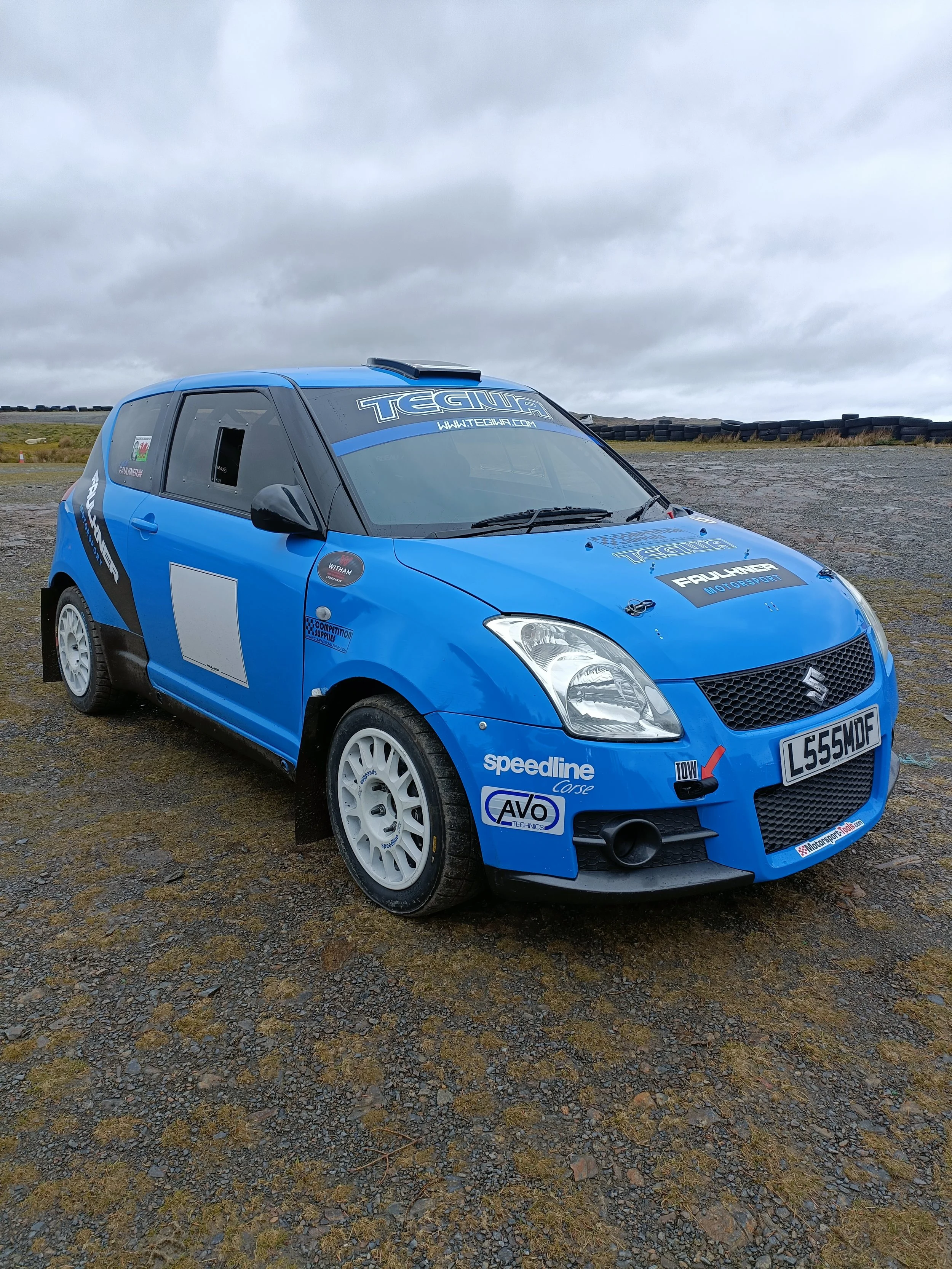
Suzuki Swift stage rally car
This project focuses on the ongoing development of a Suzuki Swift, purpose-built for stage rally competition. The car has undergone a comprehensive transformation, with every aspect engineered to maximise performance, reliability, and adaptability.
The shell was fully stripped, media blasted, lightened, and seam welded to improve rigidity and reduce weight. Further modifications were made to the strut towers, allowing for a broader range of suspension configurations and greater setup flexibility. A custom T45 roll cage was fabricated and installed, significantly enhancing both safety and chassis stiffness.
The braking system features a bespoke, floor-mounted bias pedal box, paired with 286mm four-pot front brakes. This setup delivers strong, consistent stopping performance with precise adjustability—critical for competitive stage rallying.
At the heart of the car is a development 1.4-litre engine, mated to a bespoke 5-speed dog engagement gearbox. This combination provides sharp response and direct power delivery, forming a drivetrain that is both engaging and highly effective in competitive conditions.
The suspension system is fully adjustable with three-way dampers, offering extensive scope for fine-tuning and continuous performance improvement. As with all high-level rally builds, the car remains in a constant state of development, with new components and setups regularly tested each time it leaves the workshop.
This iterative approach has proven successful, with the car achieving multiple class wins and podium finishes across the events it has contested—demonstrating both its competitiveness and development potential.
The next phase of the project will see the introduction of a new engine specification, incorporating lessons learned from the current setup to further enhance performance and reliability.